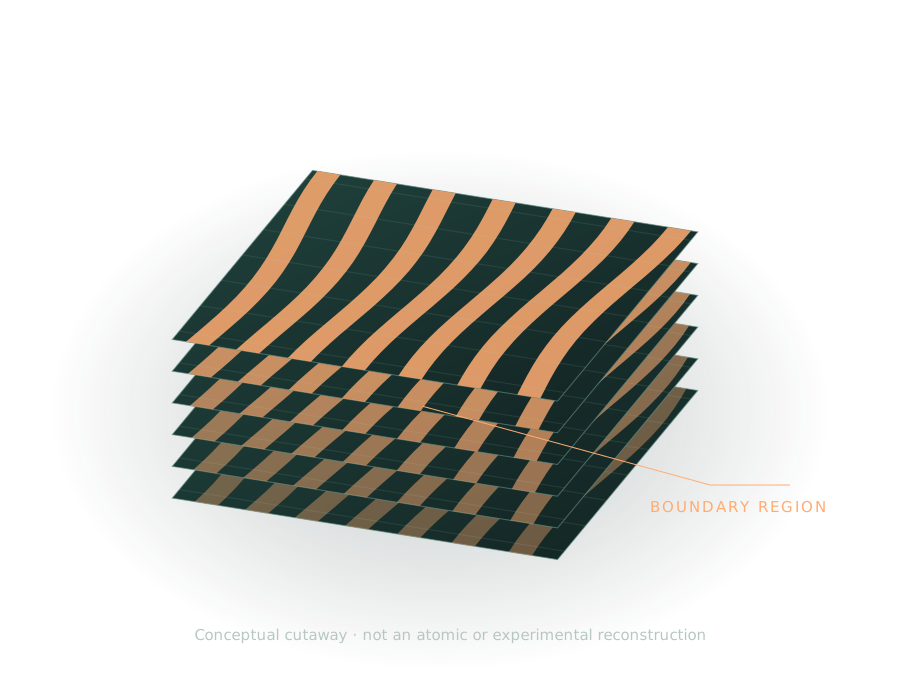
What does the shape allow?
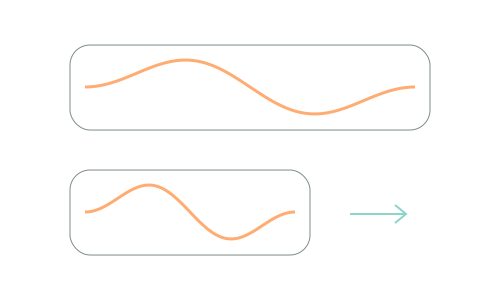
Boundaries and arrangement help determine how a system can respond. Start by identifying what changes when its geometry changes.
A system has a shape. Energy moves through it. Its past can affect its next response.
NetPhysics is exploring whether these relationships can form a common predictive framework across different physical systems.
A developing research program founded by Christopher Hill.
Shape sets the possibilities.
Scripted conceptual illustration. No measured data or validated physical simulation. Select a chapter to pause and inspect it.
Can geometry, energy and retained history help us predict different systems within a useful common framework? The aim is to discover which connections survive a careful test.
Boundaries and arrangement help determine how a system can respond. Start by identifying what changes when its geometry changes.
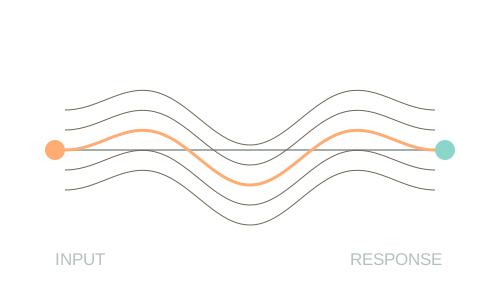
Specify what enters the system, where it is transferred or dissipated, and what can actually be measured.
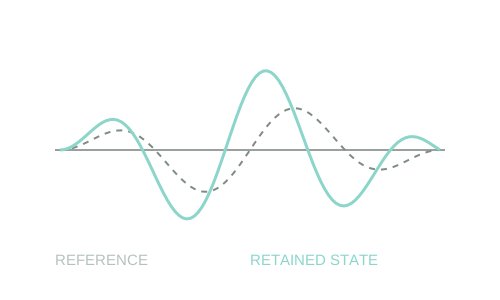
A retained physical state can affect a later response. Identify that state and compare it with conventional explanations.
The same visual language follows the whole question: change the boundary, apply an input, retain a state, and ask what a model predicts about the next response.
The film illustrates the research question. It does not solve a constitutive model, depict experimental equipment or establish a shared law.
If a proposed connection makes reliable predictions, it could help us design systems whose behavior we can anticipate. These are long-term directions for the research.
Understand how loading history affects later behavior, then ask whether that response can be predicted and deliberately used.
Connect geometric choices with resonance and response, so a design starts with a prediction that can be checked.
Test whether a precisely defined relationship transfers to another system, with clear boundaries on where it works.
NetPhysics gives a larger question a concrete research home: could these relationships reveal a deeper organization of physical behavior?
The next step is specific. Write down a model, identify a meaningful alternative, and predict something that observations can settle.
Geometry and physical memory already have extensive scientific histories. Our contribution has to come from the particular connections we propose and the predictive value they demonstrate.
Meet Christopher Hill →Follow the actual work: a measured-data analysis, a source-parameter audit and a proposed new-specimen test. Each answers a different part of the question.
A 573-species mammal analysis tests scaling alternatives. The proposed 10 kg hinge does not improve the primary held-out prediction. That result is part of the story.
Published memristor parameters support a scoped pulse comparison. Differences and unresolved source specifications remain visible.
Calibrate a candidate and credible rivals, freeze their predictions, then compare them on independent elastomer specimens. Physical calibration and data collection remain ahead.
Explore the idea, run a model, or bring a result that changes our understanding. The research grows through questions that become precise enough to test.
Website 0.8.0 · What changed · Check your installed version · Methods and verification
A crystal’s hidden structure turns a broad idea into a concrete question. Explore published evidence, change a model’s geometry and put predictions to the test.